Early bird or night owl: what your chronotype means
Your chronotype is the time your body clock prefers to sleep, and the spread between people is wide: in diaries from 53,689 Americans, the midpoint of weekend sleep ran from 0:00 to 9:53, almost 10 hours apart. Genes set part of it (351 known variants, about 13.7% heritability), age sets more, and people of 18 to 19 are the latest of all. Definite evening types among 433,268 British adults had 10% higher mortality over 6.5 years, but a 37-year study of 23,854 Finnish adults traced that excess mainly to smoking and related habits, and a 3-week trial moved 12 late types about 2 hours earlier.
What a chronotype is and how it is measured
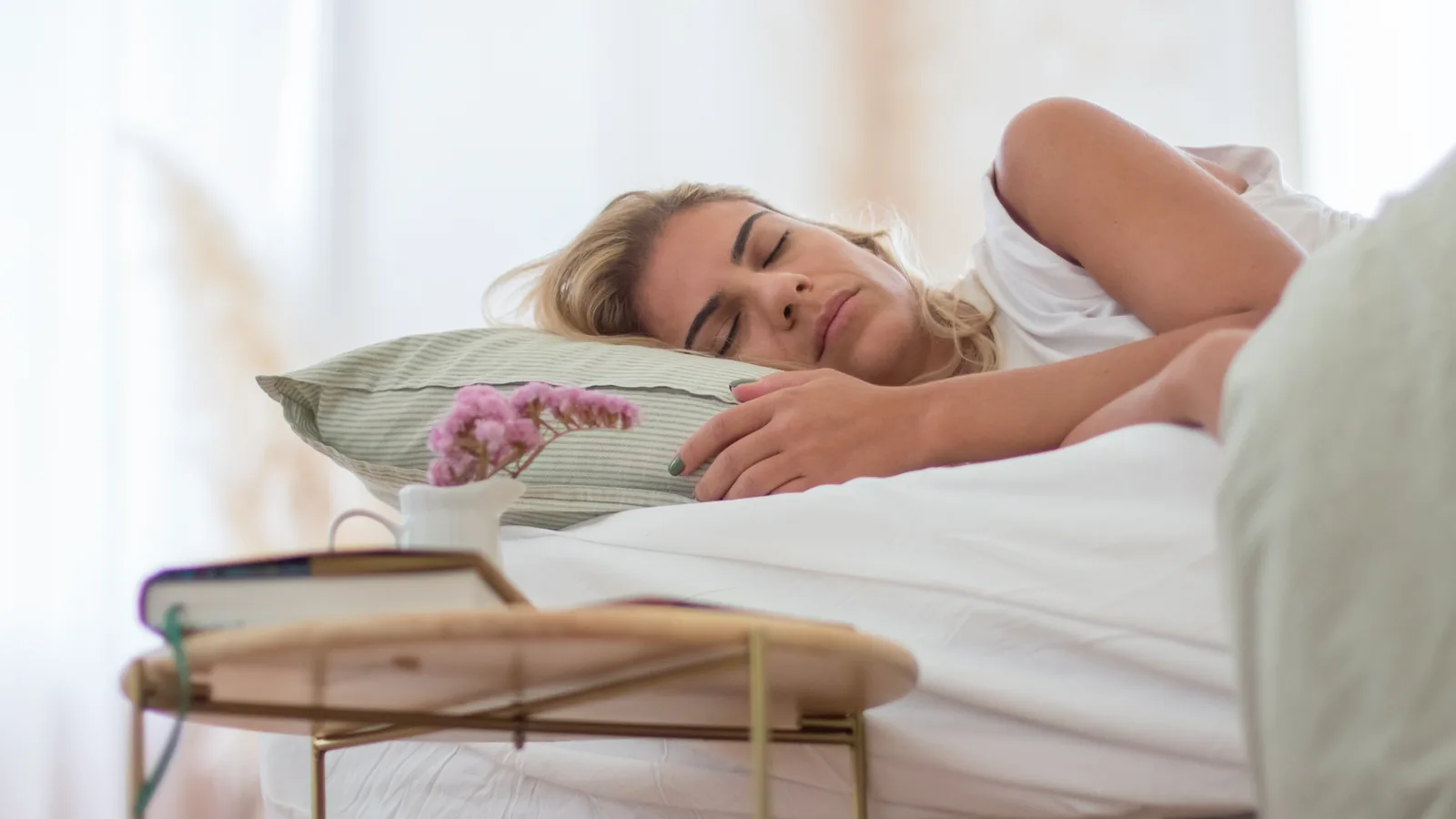
Chronotype is where your internal clock places sleep within the 24-hour day. The Munich ChronoType Questionnaire (MCTQ) defines it as the midpoint of sleep on free days: fall asleep at 0:30 and wake at 8:30 with no alarm, and your midsleep is 4:30. Free days matter because a work-day alarm tells you about your employer, not your clock.
A 2017 analysis in PLoS ONE of time-use diaries from 53,689 Americans, collected from 2003 to 2014, found a bell-shaped distribution of weekend midsleep: 25% earlier than 2:24, 50% between those two times, and 25% later than 4:15. The earliest was 0:00, the latest 9:53, almost 10 hours apart; extreme early types get up at about the time extreme late types fall asleep. The diaries held no record of earlier nights, so sleep debt could not be corrected for and some people may look later than they are.
Large cohorts usually ask one question instead. The UK Biobank asked 433,268 adults aged 38 to 73 whether they were a morning or an evening person: 27.1% said definitely morning, 35.5% more morning than evening, 28.5% more evening than morning and 9.0% definitely evening. Definite owls are about 1 in 11, and most people sit in the middle.
| Source | Who | Measure | Finding |
|---|---|---|---|
| Fischer et al. 2017, PLoS ONE | 53,689 Americans, time-use diaries 2003 to 2014 | Midpoint of weekend sleep | 25% earlier than 2:24, 25% later than 4:15; full span 0:00 to 9:53 |
| Fischer et al. 2017, PLoS ONE | Same diaries, by age | Age of the latest chronotype | 18.4 years in women (midsleep 4:27), 19.2 in men (4:40); a 70-year-old at about 2:49 |
| Knutson and von Schantz 2018, Chronobiology International | 433,268 UK Biobank adults aged 38 to 73 | Self-described type | 27.1% definite morning, 35.5% moderate morning, 28.5% moderate evening, 9.0% definite evening |
| Knutson and von Schantz 2018, Chronobiology International | Same cohort, 6.5 years, 10,534 deaths | Definite evening versus definite morning | 10% higher all-cause mortality (hazard ratio 1.10, 95% CI 1.02 to 1.18) |
| Knutson and von Schantz 2018, Chronobiology International | Same cohort | Existing conditions, definite evening versus definite morning | Psychological disorders 1.94 times the odds, diabetes 1.30, neurological 1.25, respiratory 1.22 |
| Hublin and Kaprio 2023, Chronobiology International | 23,854 Finnish adults, questionnaire 1981, deaths to 2018 | Evening versus morning type, 8,728 deaths | 9% higher all-cause mortality (hazard ratio 1.09, 95% CI 1.01 to 1.18), none among non-smokers |
| Jones et al. 2019, Nature Communications | 697,828 people, UK Biobank and a consumer genetics database | Genetic variants linked to morningness | 351, up from 24; heritability about 13.7% |
| Jones et al. 2019, Nature Communications | 85,760 people with wrist activity monitors | Least active hours, top 5% versus bottom 5% for morning variants | 25 minutes earlier (03:06 versus 03:32) |
| Facer-Childs et al. 2019, Sleep Medicine | 22 late types, 12 in the intervention group, 10 controls | 3 weeks of timed light, meals and fixed sleep times | Sleep onset 1.73 hours and wake time 1.92 hours earlier, no loss of sleep duration |
How much is genes, how much is age
Genes set part of it. A 2019 study in Nature Communications combined genetic data from 697,828 people and raised the number of known chronotype variants from 24 to 351. Among 85,760 people wearing wrist monitors, the 5% with the most morning variants had their least active hours centred 25 minutes earlier than the 5% with the fewest (03:06 against 03:32). Common variants explained about 13.7% of the trait. Genes load the dice; they do not fix the hour.
Age moves the hour more. In the American diaries, chronotype drifts later through childhood and peaks in lateness at 18.4 years in women (weekend midsleep 4:27) and 19.2 years in men (4:40), then moves earlier for the rest of life; extrapolated values put a 70-year-old at 2:49, close to a 10-year-old at 3:09. A teenager who cannot sleep before 1:00 is usually not being difficult; the clock comes round during the twenties. Men run a little later than women in early adulthood, with the largest gap, 16 minutes, at 21.6 years, but light and routine are the levers you can move.
Do night owls really fare worse
The headline finding comes from the UK Biobank, published in 2018 in Chronobiology International. Over an average 6.5 years of follow-up there were 10,534 deaths among the 433,268 participants, 2,127 of them from cardiovascular disease. After adjustment for age, sex, ethnicity, smoking, body mass index, sleep duration, deprivation and existing illness, definite evening types had a 10% higher risk of death from any cause than definite morning types (hazard ratio 1.10, 95% confidence interval 1.02 to 1.18). Each step towards eveningness added about 2% to all-cause risk; the cardiovascular figure, 4% per step, did not reach statistical significance. That is a relative difference between two groups, not a 10% chance of dying.
Differences in existing illness were larger: definite evening types were 1.94 times as likely as definite morning types to report a psychological disorder and 1.30 times as likely to have diabetes. These are odds ratios from a single snapshot: illness can make you late as easily as lateness can make you ill. The cohort was healthier than the British population, and chronotype rested on one self-description.
A longer study softens the figure. The same kind of question went to 23,854 Finnish adults in 1981, and national registers counted 8,728 deaths up to the end of 2018. Evening types again came out about 9% higher (hazard ratio 1.09, 95% confidence interval 1.01 to 1.18), but the gap shrank as smoking and related habits were accounted for, and among people who did not smoke there was no excess at all. No single cause of death was raised. The authors conclude that chronotype itself contributes little or nothing to mortality.
The genetics point the same way. Using the 351 variants as a natural experiment (Mendelian randomisation), a genetic tendency to mornings went with a lower risk of schizophrenia (odds ratio 0.89) but no detectable effect on body mass index or type 2 diabetes. Read together, the cost of being an owl looks less like the clock and more like an owl's life on a lark's schedule: shorter sleep on work days, later meals, more evening light.
Social jetlag, the owl's real problem
Social jetlag is your midsleep on free days minus your midsleep on work days. Sleep 1:00 to 9:00 at the weekend but 0:00 to 6:30 in the week and you carry 1 hour 45 minutes of it. For most people the work-day midpoint is earlier, because an alarm ends sleep early. The American diaries put a figure on the mismatch: an 8:00 start, 8 hours of sleep, 35 minutes to get ready and a commute of 25 minutes call for a midsleep near 3:00, and as much as 60% of people are later than that.
Whether that gap can close was tested in a small randomised trial in Sleep Medicine in 2019. Twenty-two healthy late types, average age 21.3 years, were split at random: 12 followed a schedule for 3 weeks, 10 kept a placebo instruction to eat lunch at the same time each day. The schedule set wake and bed times 2 to 3 hours earlier, outdoor light in the morning and low light in the evening, the same times on work days and free days, fixed meals with no dinner after 19:00, no caffeine after 15:00 and no nap after 16:00.
On wrist monitors the 12 advanced sleep onset by 1.73 hours and wake time by 1.92 hours, with melatonin onset 1.96 hours earlier and no loss of sleep duration. They reported less depression, stress and morning sleepiness, and their reaction time and grip strength improved. The 10 controls drifted about 1.2 hours later. Twelve people over 3 weeks is a pilot, the mood measures were self-reported, and nobody knows who kept it up. It shows that a late clock answers to ordinary signals, light and meals above all, within weeks.
What to do with your chronotype, and when to see a doctor
Measure first: 2 or 3 free days without an alarm, the midpoint of your sleep, and the same for a work day; the Chronotype Finder does the arithmetic. The smaller that gap the better. If you are an intermediate type, as most people are, the advice is consistency: the same wake time 7 days a week, daylight soon after waking, and the rules in our guides on when the last cup should be and screens in the evening.
If you are a late type with early obligations, borrow the trial's recipe rather than an alarm alone; the checklist below has it in full, and our guide on morning light covers the strongest of those signals. Expect roughly 2 hours of movement in 3 weeks and no more; 12 people is a thin basis, and nobody in the trial became a lark. Early types have the opposite problem: late evenings cost them sleep, and the fix is protecting bedtime.
Some situations need a doctor. If you regularly cannot fall asleep before 3:00 or 4:00 and cannot function by day, ask about delayed sleep-wake phase disorder, treated with timed light and, under supervision, melatonin. In the UK melatonin is prescription-only, mostly for people of 55 and over; younger adults and children get it only on a specialist's advice. Tell the doctor if you are pregnant or breastfeeding, have liver, kidney or autoimmune problems, or take blood pressure medicines, antidepressants, blood thinners or other sleeping tablets. Low mood that tracks with lateness deserves its own appointment, and do not cut sleep to get up earlier: the 7 to 9 hours in our guide on how much sleep adults need matter more than the hour they start.
Three weeks to move a late clock earlier
- Measure first: 2 or 3 free days without an alarm, note sleep and wake times, take the midpoint
- Wake 2 to 3 hours earlier than usual and get outdoor light within the first hour
- Go to bed 2 to 3 hours earlier than usual, lights low from dinner onwards
- Keep the same sleep and wake times on all 7 days, weekends included
- Breakfast soon after waking, lunch at a fixed time, dinner finished by 19:00
- No caffeine after 15:00, no nap after 16:00, and exercise in the morning if you exercise
- Measure again after 3 weeks; about 2 hours of change is a realistic gain
Frequently asked
How do I work out my chronotype?
Take 2 or 3 free days without an alarm, note when you fall asleep and wake, and find the midpoint. Sleeping 23:00 to 7:00 gives a midsleep of 3:00, near the middle of the distribution; 1:00 to 9:00 gives 5:00, later than at least 3 in 4 people in the US survey. The Chronotype Finder on this site does the same calculation.
Is being a night owl genetic?
Partly. A 2019 analysis of 697,828 people found 351 genetic variants linked to morningness, and wrist monitors put the people carrying the most about 25 minutes earlier than those carrying the fewest. Common variants explain around 13.7% of the trait; age, light and routine account for much of the rest.
Do night owls die earlier?
In the UK Biobank, definite evening types had a 10% higher risk of death over 6.5 years than definite morning types, a relative difference between groups rather than a personal chance of dying. A 37-year Finnish follow-up of 23,854 adults put the figure at 9% and traced it mainly to smoking and related habits, with no excess among people who did not smoke.
Can a night owl become a morning person?
To a degree. In a 3-week randomised trial, the 12 late types who followed a schedule of morning light, earlier meals and fixed times moved their sleep about 2 hours earlier and felt better for it, while the 10 controls drifted later. Nobody became an extreme early type, and the gain depends on keeping the routine.
Why are teenagers so late?
Because their clock is. In diaries from 53,689 Americans, chronotype drifted later through childhood to a peak at 18.4 years in women and 19.2 years in men, then moved earlier for the rest of life. Most of the lifetime change (64% in women, 55% in men) happens between 15 and 25.
What is social jetlag?
The difference between your midsleep on free days and on work days. Sleeping 1:00 to 9:00 at the weekend but 0:00 to 6:30 in the week gives 1 hour 45 minutes. Late types carry the most of it, because a work-day alarm cuts their sleep short at the end that matters.
Sources
- Fischer et al. 2017, PLoS ONE: Chronotypes in the US, influence of age and sex · 53,689 respondents, American Time Use Survey 2003 to 2014; weekend midsleep quartiles 2:24 and 4:15, range 0:00 to 9:53; peak lateness at 18.4 years (women) and 19.2 years (men); about 60% later than an 8:00 work start allows; no correction for sleep debt
- Knutson and von Schantz 2018, Chronobiology International (full text at PubMed Central): Associations between chronotype, morbidity and mortality in the UK Biobank cohort · 433,268 adults aged 38 to 73, 6.5 years, 10,534 deaths; definite evening HR 1.10 (95% CI 1.02 to 1.18); odds ratios 1.94, 1.30, 1.25, 1.22; single question, observational, cohort healthier than the UK population
- Hublin and Kaprio 2023, Chronobiology International (abstract at Europe PMC): Chronotype and mortality, a 37-year follow-up study in Finnish adults · 23,854 Finnish adults, questionnaire 1981, deaths to the end of 2018 (8,728); evening type HR 1.09 (95% CI 1.01 to 1.18) after adjustment, attenuation mainly from smoking and related habits; no excess among non-smokers; little or no independent contribution of chronotype
- Jones et al. 2019, Nature Communications (full text at PubMed Central): Genome-wide association analyses of chronotype in 697,828 individuals provides insights into circadian rhythms · 351 loci, up from 24; 85,760 with activity monitors, least active hours 25.1 minutes earlier (03:06 against 03:32); heritability 13.7%; Mendelian randomisation: schizophrenia OR 0.89, wellbeing 0.04 SD higher, no effect on BMI or type 2 diabetes
- Facer-Childs et al. 2019, Sleep Medicine (accepted manuscript, University of Birmingham repository): Resetting the late timing of night owls has a positive impact on mental health and performance · 22 late types (aged 21.3 years, corrected midsleep 06:52) randomised to 12 in the intervention group and 10 controls; 3 weeks; sleep onset 1.73 h and wake time 1.92 h earlier, melatonin onset 1.96 h, cortisol peak 2.22 h; no change in sleep duration; full protocol including caffeine before 15:00 and no nap after 16:00
Read on
 Life
Morning light and the body clock: how much you need
Life
Morning light and the body clock: how much you need
 Health
How much sleep adults really need: 7 to 9 hours, and why
Health
How much sleep adults really need: 7 to 9 hours, and why
 Life
Caffeine: when the last cup should be
Life
Caffeine: when the last cup should beTools that fit
This guide is for general information. It does not replace medical advice or an examination.