What is ripe right now.
Choose a month and a region, and the basket shows the vegetables and fruits typically harvested outdoors then, plus the roots, cabbages and apples that keep in local storage. Copy the list for your shopping, or share it as a picture.
In season, month by month.
Pick a month and a region. The basket fills with the vegetables and fruits that are typically harvested outdoors then, or that come from local storage.
Northern: Scandinavia, the Baltics, Scotland. Central: Germany, the Netherlands, Poland, Austria. Mediterranean: Spain, Italy, Greece, southern France.
Pick a month and a region to fill the basket.
Vegetables 0
Fruits 0
A typical calendar for each region, not a rule: the exact weeks shift with latitude, altitude and the year. Greenhouse produce is not counted. from storage marks roots, cabbages and apples that keep for months after harvest.
How it works.
- Tap a month; the current one is preselected. Then choose the region that matches your climate: Northern Europe, Central Europe or the Mediterranean.
- Read the two lists, vegetables and fruits, sorted from A to Z, and watch the basket fill with the number of items in season. A small badge marks what comes from storage.
- Press Copy list to take the names with you as plain text, or save the result card as a picture and share it.
Why the month on the calendar changes what is on your plate
Produce that travels a short way is usually picked closer to ripeness. A tomato grown 30 km from your kitchen can be harvested red; one shipped 2,000 km is often picked green and never builds the sugars of its last days on the plant. Time matters as much as distance: leafy vegetables such as spinach can lose about half of their vitamin C within 3 to 4 days at room temperature, and roughly 50 per cent of their folate after 8 days even in a fridge at 4 °C. Seasonal buying shortens that gap. It is also the cheapest moment: at the local harvest peak supply is highest, so strawberries in June or courgettes in August often cost about half of their shoulder-month price. The list you copy is a good start for eating 30 different plants a week and for reaching 30 g of fibre a day, since the calendar does the choosing.
Where the calendar comes from, and what it cannot know
The basket holds 56 vegetables and 39 fruits. For each of three regions it lists the months of typical outdoor harvest, plus the months in which roots, cabbages, onions, pumpkins, apples and pears come from local cold storage. Storage is not a compromise: a carrot or an apple kept at 0 to 4 °C with high humidity lasts 4 to 6 months and keeps most of its fibre, potassium and energy, although vitamin C declines by roughly 30 to 50 per cent over that time. The honest limits: "in season" depends on latitude, altitude and the weather of the year, so the first strawberries appear in March on the Spanish coast and in June in Scandinavia, about 2,000 km and 3 months apart. Heated greenhouses blur the picture, so the basket does not count them. Treat every month as typical, not as a rule, and let a market stall near you have the final word. The gardening guide explains what an hour of digging is worth as exercise.
How to read the three regions
Northern Europe has a short outdoor season of roughly 6 months from May to October, then relies on storage crops and kale. Central Europe stretches to about 7 months with a long autumn of cabbages, pumpkins and apples. The Mediterranean turns the year around: its main salad and citrus months are October to April, while June to September belongs to tomatoes, peppers, melons and figs, the produce pattern behind the Mediterranean diet. Pick the region that matches your climate rather than your border, and expect a shift of 2 to 3 weeks between the coast and the hills.
Frequently asked.
Which region should I pick if I live in the UK or Ireland?
Choose Central Europe for England, Wales and Ireland, and Northern Europe for Scotland and the north. The calendars differ by 2 to 4 weeks, so the two lists together bracket what a local market will offer.
What does the from storage badge mean?
It marks produce that was harvested weeks or months earlier and kept in cool, humid storage: roots, cabbages, onions, pumpkins, apples and pears. Stored produce is a normal part of winter eating and keeps most of its fibre, minerals and energy.
Why are tomatoes not listed in Central Europe in May?
The basket only counts outdoor harvest and local storage. Tomatoes in May come from heated greenhouses or from far away, and the calendar leaves those out so the picture stays honest.
Is the calendar exact for my town?
No. It is a typical calendar for a broad region. The first harvest shifts by roughly 4 days for every 100 km further north, by about 3 days per 100 m of altitude, and with the weather of the year. Use it as a guide and let your nearest farm shop or market confirm the timing.
Does the tool store anything about me?
Only the region you picked, saved in your browser so it is preselected next time. Nothing is sent anywhere; the list and the picture are made on your device.
Can I use the copied list as a shopping list?
Yes. The text contains the month, the region, both lists with counts and the storage marks, so you can paste it into a notes app or a message.
Guides behind this tool
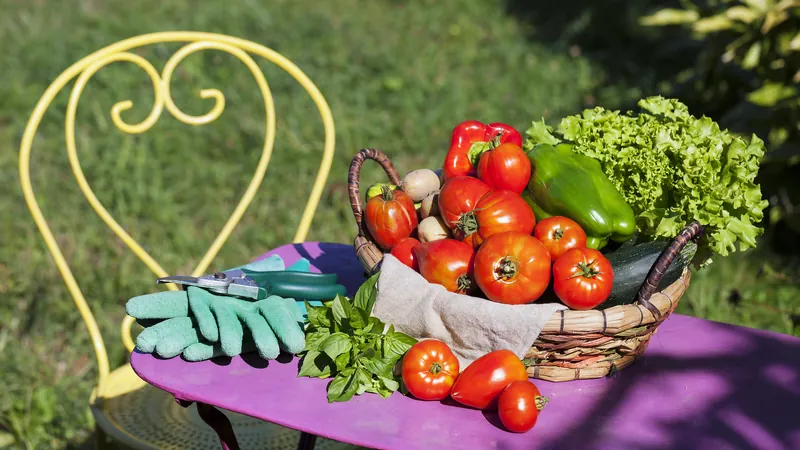 Food
30 plants a week for the gut: where the number comes from
Food
30 plants a week for the gut: where the number comes from
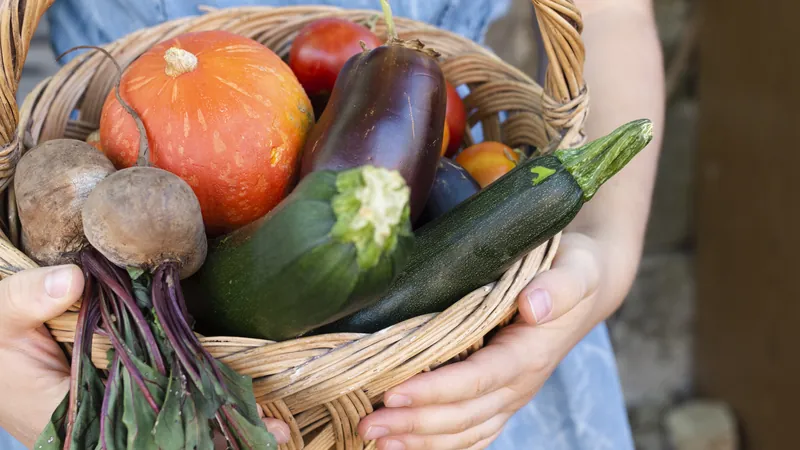 Food
30 grams of fibre a day: where the number comes from
Food
30 grams of fibre a day: where the number comes from
 Nature
Gardening: exercise, therapy, or both?
Nature
Gardening: exercise, therapy, or both?
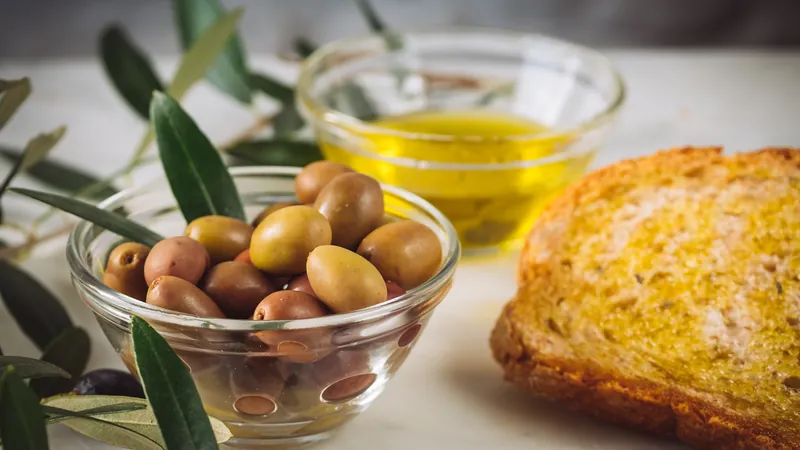 Food
The Mediterranean diet: what the evidence says
Food
The Mediterranean diet: what the evidence saysMore tools
The Seasonal Basket shows a typical harvest calendar for three broad regions. It is not a nutrition plan, does not rate any food as good or bad, and what grows near you may differ by a few weeks. This page is for general information and does not replace medical advice.