30 grams of fibre a day: where the number comes from
Aim for 25 to 30 g of fibre a day. The NHS target for adults is 30 g, the World Health Organization's 2023 guideline asks for at least 25 g, and the review behind both figures, 185 prospective studies and 58 trials pooled in The Lancet in 2019, found the largest fall in risk at 25 to 29 g a day, with the highest fibre eaters 15 to 30 percent less likely to die or to develop coronary heart disease, stroke, type 2 diabetes or colorectal cancer than the lowest. Most adults in the UK eat about 20 g, so the gap is roughly 10 g, which is one 150 g portion of cooked lentils.
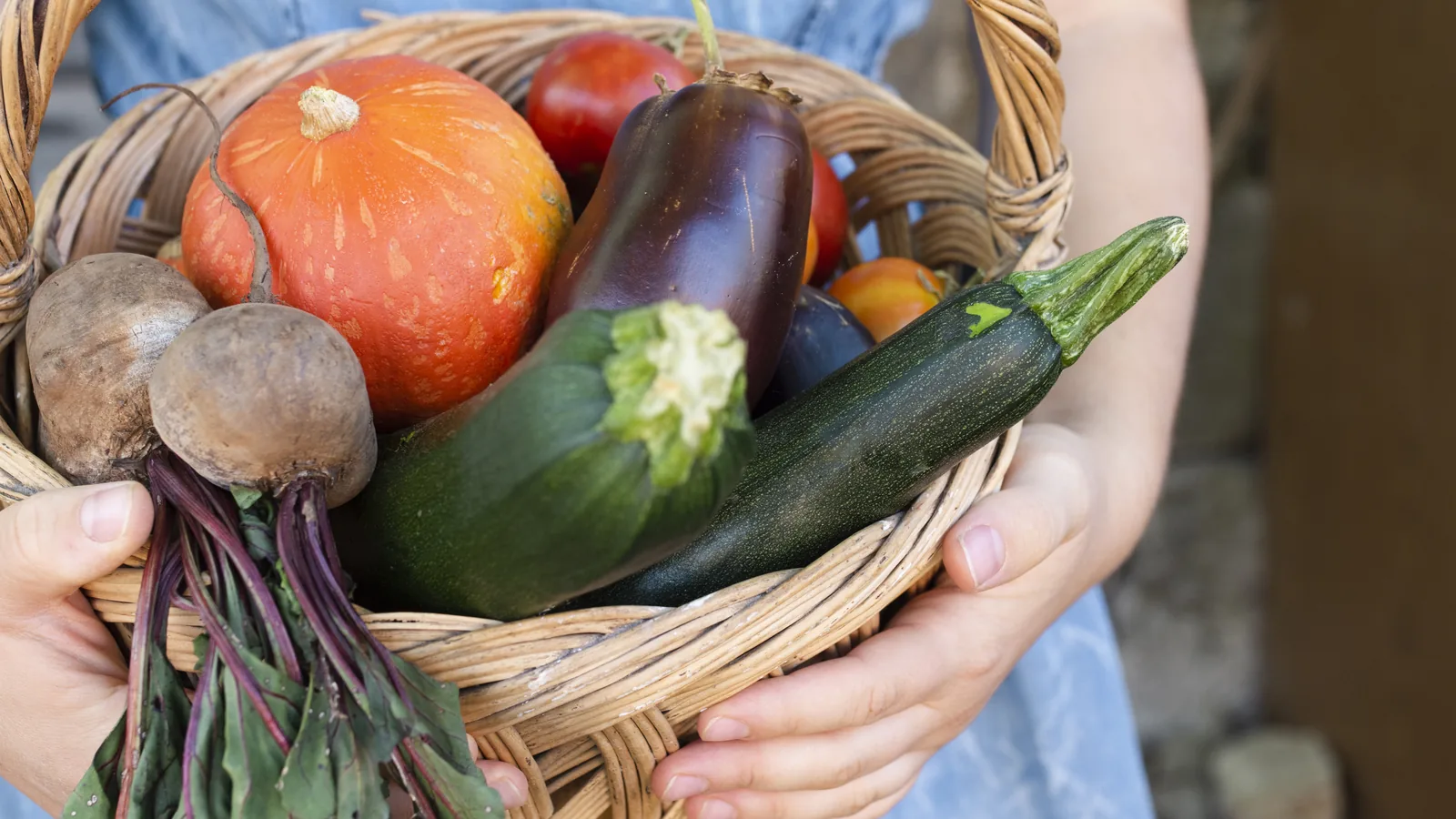
Where the 30 g figure comes from
The 30 g target is British. UK government guidelines, as the NHS states them, ask adults to raise their fibre intake to 30 g a day as part of a balanced diet, with stepped targets for children of about 15 g at 2 to 5 years, 20 g at 5 to 11 and 25 g at 11 to 16. The World Health Organization's guideline on carbohydrate intake, published on 17 July 2023, sets the adult line as a minimum: at least 25 g a day of naturally occurring dietary fibre as eaten in foods, graded a strong recommendation. For children it suggests at least 15 g at 2 to 5 years, 21 g at 6 to 9 and 25 g from age 10, graded conditional because the evidence in children is thinner.
The European Food Safety Authority's reference value from 2010 is also 25 g a day for adults, and the European Commission's Knowledge for Policy gateway notes that recommendations from food and health bodies range from 25 to 38 g a day. Part of the spread is method: EFSA and the UK express fibre as the total measured by the AOAC laboratory method, which is also what food labels declare, while FAO and WHO have traditionally framed their figures around non-starch polysaccharides, a narrower measure. In this guide, and on any label, fibre means the total. So 25 g is the floor that WHO and EFSA agree on, 30 g is the UK's more ambitious target, and the two are closer than they look.
| Food as eaten | Fibre per 100 g | Typical portion | Fibre in portion |
|---|---|---|---|
| Chia seeds, dried | 34.4 g | 15 g (1 tablespoon) | 5.2 g |
| Almonds | 12.5 g | 30 g handful | 3.8 g |
| Oats, dry | 10.1 g | 40 g bowl of porridge | 4.0 g |
| Black beans, cooked | 8.7 g | 150 g | 13.1 g |
| Lentils, cooked | 7.9 g | 150 g | 11.9 g |
| Raspberries | 6.5 g | 80 g | 5.2 g |
| Wholewheat bread | 6.0 g | 2 slices, 60 g | 3.6 g (white bread: 1.6 g) |
| Pear, with skin | 3.1 g | 1 medium, 170 g | 5.3 g |
| Potato, baked with skin | 2.2 g | 200 g | 4.4 g |
What the evidence behind the number shows
Both the WHO guideline and the UK target lean on the same body of work: a series of systematic reviews and meta-analyses commissioned by WHO and published in The Lancet in January 2019 by Reynolds and colleagues at the University of Otago. It pooled just under 135 million person-years of follow-up from 185 prospective studies, plus 58 randomised trials with 4,635 adult participants. People with existing chronic disease, weight-loss trials and supplement trials were excluded, so the results describe fibre from food in the general population.
Comparing the highest fibre eaters with the lowest, the observational data showed a 15 to 30 percent lower risk of all-cause and cardiovascular mortality, coronary heart disease, stroke, type 2 diabetes and colorectal cancer. The WHO guideline reproduces the pooled figures: a relative risk of 0.85 for death from any cause across 10 studies and 947,111 participants, 0.77 for cardiovascular death, 0.76 for coronary heart disease, 0.82 for stroke, 0.84 for type 2 diabetes across 17 studies and 640,656 participants, and 0.84 for colorectal cancer across 22 studies and 1,560,045 participants. The trials moved risk factors the same way, if modestly: body weight was 0.37 kg lower across 27 trials, systolic blood pressure 1.27 mmHg lower across 15 trials and LDL cholesterol 0.09 mmol/L lower across 34 trials when higher fibre intakes were compared with lower ones.
The relationship was dose dependent. WHO summarises it as roughly a 10 to 20 percent reduction in risk for every extra 8 g of fibre a day; per 8 g, the pooled relative risk was 0.93 for all-cause mortality, 0.87 for cardiovascular death, 0.85 for type 2 diabetes and 0.92 for colorectal cancer. The certainty of the evidence was graded moderate for fibre, low to moderate for whole grains and low to very low for glycaemic index, which is why the guidance is written in grams of fibre rather than in glycaemic terms.
Why the sweet spot is 25 to 29 g and what the evidence cannot say
When the review compared the lowest intakes against bands of 15 to 19, 20 to 24, 25 to 29, 30 to 34 and 35 to 39 g a day, the 25 to 29 g band showed reductions for the largest number of outcomes: all-cause mortality, coronary heart disease, cardiovascular disease, stroke, type 2 diabetes, and colorectal and breast cancer. The curves suggested further benefit above 30 g, and benefit was visible up to about 40 g, but the number of studies reporting such intakes tapered off from 30 g and was scarce beyond 40 g. WHO chose 25 g as its threshold because it combined a clear benefit with an amount many people can actually reach, and says so in the guideline.
The limits are worth naming. Nearly all the outcome data are observational, so they show that people who eat more fibre fare better, not that fibre alone is the cause; high-fibre eaters also eat more vegetables, fruit and whole grains, and intake was measured with food questionnaires. The authors state that their results apply to the general population rather than to people already ill. One signal ran the other way: a relative risk of 1.16 for endometrial cancer across 4 studies, graded very low certainty. Apart from that, WHO identified no undesirable effects at intakes of at least 25 g a day.
| Outcome | Relative risk | Studies | Participants | Certainty |
|---|---|---|---|---|
| Death from any cause | 0.85 | 10 | 947,111 | Moderate |
| Cardiovascular death | 0.77 | 7 | 947,870 | Moderate |
| Coronary heart disease | 0.76 | 9 | 299,386 | Moderate |
| Stroke | 0.82 | 9 | 364,204 | Moderate |
| Type 2 diabetes | 0.84 | 17 | 640,656 | Moderate |
| Colorectal cancer | 0.84 | 22 | 1,560,045 | Moderate |
| Breast cancer | 0.93 | 18 | 1,283,089 | Moderate |
| Endometrial cancer | 1.16 | 4 | 417,031 | Very low |
How far most people are from it
The gap is wide and consistent. Adults in the UK average about 20 g a day against the 30 g target, and children aged 11 to 18 get about 16 g. WHO describes intakes as generally low at the global level relative to its recommendations. In the EU, the Global Burden of Disease study, which counts a diet as low in fibre below 21 to 22 g a day, attributed almost 60,000 deaths and over 1 million disability-adjusted life years to low-fibre diets in 2019, mainly through ischaemic heart disease (about 37,000 deaths), stroke (14,000) and colorectal cancer (4,000).
Two things follow. The 10 g between the average and the target is exactly the range where the dose-response data are strongest, so the average eater has more to gain than someone already at 30 g. And the shortfall is made of ordinary choices, white bread instead of wholemeal, rice without pulses, fruit peeled, that can be reversed one meal at a time.
What 30 g looks like on a plate
The NHS lays out a day that reaches the target without unusual foods. A breakfast of 2 slices of wholemeal toast with peanut butter and a medium orange gives around 8.3 g; a lunch of wholemeal spaghetti with a lentil and tomato sauce around 11 g; a dinner of grilled chicken, a skin-on baked potato, carrots and green beans around 11.2 g. That is 30.5 g before any snack of nuts, fruit or hummus. The pattern is the point: pulses in one meal, a whole grain in two, potato skins left on.
Reference values from USDA FoodData Central show why pulses and whole grains do the heavy lifting. Cooked lentils carry 7.9 g of fibre per 100 g, black beans 8.7 g and chickpeas 7.6 g, so a 150 g portion adds 11 to 13 g on its own. Wholewheat bread has 6.0 g per 100 g against 2.7 g for white, wholewheat pasta 3.9 g against 1.8 g for standard cooked pasta, and brown rice 1.6 g per 100 g cooked against 0.4 g for white. Among fruit and vegetables, raspberries (6.5 g), avocado (6.7 g), green peas (5.5 g), broccoli (3.3 g) and pears (3.1 g) lead; an apple with its skin has 2.4 g per 100 g and a baked potato eaten with the skin 2.2 g. Dry oats give 10.1 g per 100 g, almonds 12.5 g, dried figs 9.8 g and chia seeds 34.4 g, though a tablespoon of chia weighs about 15 g and so adds about 5 g. On labels, high in fibre means at least 6 g per 100 g, and in the EU a food may be called a source of fibre from 3 g per 100 g. The Plate Builder shows how a meal's proportions move these totals.
Building up without the bloating, and who should check first
Fibre is fermented by gut bacteria, so jumping from 20 to 30 g overnight usually means gas and bloating for a week or two. Add one change at a time over a few weeks, spread fibre across meals rather than loading one, and drink more water as you go, because fibre holds it. Choose variety: the benefits in the review came from fibre in whole grains, pulses, vegetables and fruit together, and supplement trials were excluded from the analysis, so a fibre powder is not what the evidence describes. The guide on what the longest-lived regions have in common shows the same food pattern from another angle.
Some people should agree a plan first. If you have irritable bowel syndrome, inflammatory bowel disease, diverticular disease or a narrowed bowel, or have had bowel surgery, the type of fibre matters and a dietitian's advice comes before any target. If you take insulin or other glucose-lowering medication, a higher fibre intake can change how your blood glucose responds to meals, so monitor and tell your care team. With chronic kidney disease, many high-fibre foods (pulses, nuts, dried fruit, potatoes with skin) are also rich in potassium and phosphorus, so ask before adding them. Under 18, use the children's targets above rather than 30 g. And a change in bowel habit that lasts more than a few weeks, blood in the stool, unexplained weight loss or persistent pain are reasons to see a doctor, not to add bran.
Ten grams more, one step at a time
- Swap white bread for wholemeal: about 2 g more per 2 slices
- Add 150 g of cooked lentils, beans or chickpeas to one meal: 11 to 13 g
- Porridge from 40 g of oats with 80 g of raspberries: about 9 g before you leave the house
- Keep the skin on potatoes, apples and pears
- Read labels: 6 g per 100 g counts as high in fibre
- Add fibre over a few weeks and drink more water as you go
- With a bowel condition, kidney disease or glucose-lowering medication, ask your doctor or dietitian first
Frequently asked
Is 30 g of fibre a day too much?
No. WHO found no undesirable effects at intakes of at least 25 g a day apart from a very-low-certainty signal for endometrial cancer, and the dose-response data showed benefit up to about 40 g. The practical limit is how fast you get there: build up over a few weeks to avoid bloating.
Do I need 25 g or 30 g?
Both are defensible. WHO sets 25 g as a minimum and the UK sets 30 g as a target, and the 2019 review found the largest benefit for the most outcomes at 25 to 29 g a day. Treat 25 to 30 g as the band to aim for.
Does a fibre supplement count?
Not in the evidence behind the targets. The Lancet review excluded supplement trials, and the WHO recommendation is for naturally occurring fibre as eaten in foods. A supplement can help constipation, but the 15 to 30 percent lower disease risk was measured in people eating whole grains, pulses, vegetables and fruit.
How much fibre do children need?
The NHS suggests about 15 g a day at 2 to 5 years, 20 g at 5 to 11 and 25 g at 11 to 16; WHO suggests at least 15 g at 2 to 5, 21 g at 6 to 9 and 25 g from age 10. UK children aged 11 to 18 currently average about 16 g.
What counts as a high-fibre food?
On a label, high in fibre means at least 6 g of fibre per 100 g, and in the EU a food may be called a source of fibre from 3 g per 100 g. Cooked lentils (7.9 g per 100 g), wholewheat bread (6.0 g) and raspberries (6.5 g) pass the higher bar; white rice (0.4 g) and white bread (2.7 g) do not.
Why do I feel bloated when I eat more fibre?
Gut bacteria ferment fibre and produce gas, and the gut needs time to adjust. Add fibre over a few weeks, spread it across meals and drink more water. If bloating comes with pain, blood in the stool or a change in bowel habit lasting more than a few weeks, see a doctor.
Sources
- Reynolds et al. 2019, The Lancet: Carbohydrate quality and human health, a series of systematic reviews and meta-analyses · 185 prospective studies and 58 trials with 4,635 participants; 15 to 30 percent lower risk for the highest fibre eaters; greatest benefit at 25 to 29 g a day; commissioned by WHO; abstract read via PubMed
- World Health Organization 2023: Carbohydrate intake for adults and children, WHO guideline · Published 17 July 2023; at least 25 g of dietary fibre a day for adults (strong recommendation); Table 2 pooled relative risks and the 10 to 20 percent per 8 g figure; full PDF read
- NHS: How to get more fibre into your diet · 30 g a day for adults, average intake about 20 g, children's targets, example meals of 8.3, 11 and 11.2 g; page reviewed 2 March 2026
- European Commission, Knowledge for Policy: Dietary fibre (Health Promotion and Disease Prevention Knowledge Gateway) · Recommendations across bodies 25 to 38 g a day; EFSA and AOAC method; Global Burden of Disease 2019 estimates for the EU; updated 12 March 2026
- USDA FoodData Central, SR Legacy reference data · Fibre, total dietary, per 100 g for the foods in the table (lentils, black beans, chickpeas, oats, breads, pasta, rice, fruit, vegetables, nuts and seeds); retrieved September 2026
Read on

Tools that fit
This guide is for general information. It does not replace medical advice or an examination.